
Other Insights


Dec 4 2025
AI at Work: How Microsoft 365 Copilot Is Moving Sales, Service, and Finance Teams to the Frontier


















Sep 25 2022
What does Packaged foods, Medical/Pharma, Health Providers, Real Estate and Beverages have in common?


Need help or want to know more?
Find our contact info here
“DynamicsPrint® with IMP is the heart of our planning estimations and imposition systems.
Estimating has become an important science. Our young estimators can deliver accurate plans just as an experienced estimator, with loads of experience, would.”
Angel Viveros, Estimation Manager
Foli De Mexico, Mexico
“The reason we chose DP was because it’s an industry solution which solves many of the problems we had in the standard Microsoft Dynamics setup. Also, there was demand from the management to have final costing, which was also a major challenge in the standard Dynamics solution.
DynamicsPrint® also helps us greatly with scheduling and shop floor management. The data gathered gives us great insights, and results in a much more cost-efficient production.”
Jochem Sants, Project Manager
Van der Most, Heerde, Netherlands
“The professional and highly skilled DynamicsPrint® team led the implementation to develop the expertise internally at DCM with a team of Subject Matter Experts from each of the specialized print production areas. DynamicsPrint’s expertise regarding the system and the industry was instrumental to ensuring the configurations were done properly. As this is a highly configurable solution, the approach and implementation was very well structured and ensured that the team worked from the basic setups to the more complex setups with a pace that was manageable and retainable.
DynamicsPrint® adjusted the resource requirements to accommodate both technical and functional areas of expertise as needed throughout the project, providing best practice directives to ensure that the proper approach was being followed.”
Karen Redfern, VP Operations Technology
DCM, Canada
“I just wanted to let you know how happy I am with DynamicsPrint® and the support you have given KP San Leandro since our launch. The seemingly endless set of tools available really help us run and improve our business.
The visibility into job statuses, P&L, and the ability to create and manage cues that give our team a personalized look into their own area of responsibility have become essential to our business model. I can’t even imagine going back to our old system. Thanks to the DynamicsPrint® team for all your help and support.”
Mark Floyd, Division Director
KP Corp. San Leandro, USA
Print providers are always looking for ways to get more out of the equipment they already own. But many overlook a major opportunity hidden in plain sight: underutilized press time. According to Keypoint Intelligence, most digital presses operate at about 65% utilization, while business leaders target 73%. That 8% gap translates directly into unrealized revenue.
So what’s holding shops back?
Start With Visibility
The first barrier is often a lack of clear visibility. Production data is scattered across spreadsheets, manual notes, or isolated systems. Without a real-time view into how equipment is performing, it’s nearly impossible to spot where time is lost — whether in prepress delays, idle machines during shift changes, or slow handoffs between departments.
“The most effective automation strategies start with insight,” says Mark Boyt, Principal Analyst at Keypoint Intelligence. “Real data turns automation from a buzzword into a business advantage.”
Print operations that use connected dashboards and real-time analytics gain critical insight into daily workflows. They can see when and where utilization drops, identify repeat offenders in the process, and pinpoint friction points that go unnoticed without data.
Map the Bottlenecks
Not every slowdown is where you expect. In fact, it’s common for bottlenecks to occur outside of the press itself. Files might wait on customer approval. Job tickets arrive incomplete. Finishing lags behind press output. Each of these delays reduces productivity, even if the presses are technically functioning well.
Mapping the full job lifecycle from intake to delivery helps teams identify the true barriers to efficiency. That’s where targeted automation, smarter coordination, or even modest technology upgrades can unlock real ROI.
Invest Based on Data, Not Guesswork
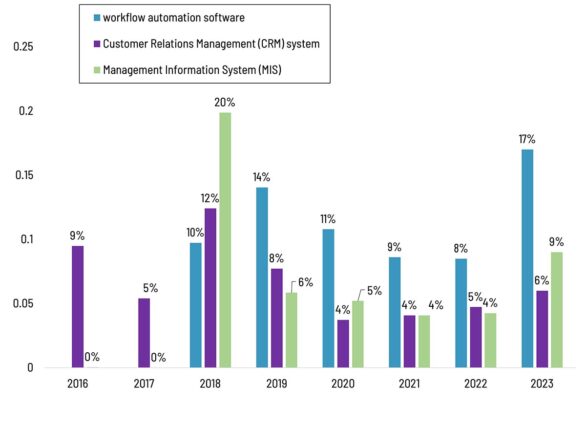
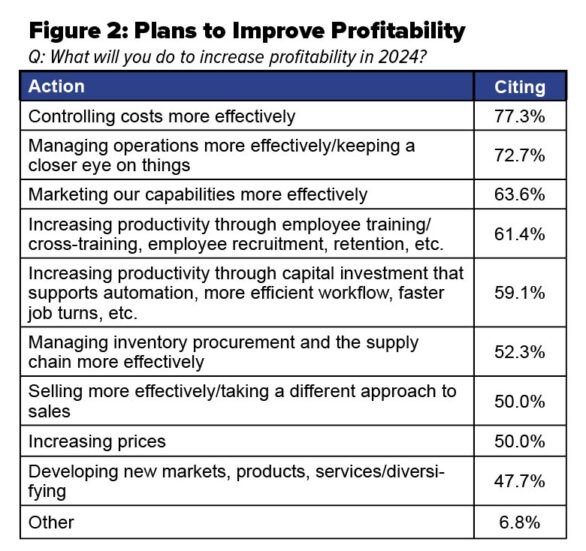
Knowing exactly where time and capacity are lost allows leaders to invest more strategically. If analytics show consistent backlogs in prepress or approvals, the solution might be automation software or training, not a new press.
Conversely, if performance data shows existing equipment is nearing full capacity, then it becomes easier to justify investment in new hardware. Data turns investment from guesswork into strategy.
OEMs also benefit from this approach. With more informed customers, sales conversations can focus on measurable improvements, not assumptions.
Build a Culture of Continuous Improvement
Improving press utilization isn’t a one-time project, it’s a mindset. The most successful print providers treat their operations like living systems, constantly tuned and refined. They review numbers regularly, empower teams with insight, and treat each improvement as a step toward sustained growth.
“Once print providers can clearly see where time and capacity are being lost,” Boyt explains, “they can make informed decisions about where to automate, where to invest, and where to grow.”
Why It Matters in 2026 and Beyond
As the print industry moves forward, the advantage will belong to companies that truly understand their utilization rates. Those that harness real-time data and automation will make smarter decisions, deliver more billable work, and turn every production hour into measurable profit.
Book Demo